Skip to content
Kubrawiyya

Najm al-Dīn Kubrā

Founder of the Kubrawī order and martyr of the Mongol conquest of Khwarazm. His disciples spread across Persia, India and Kashmir.

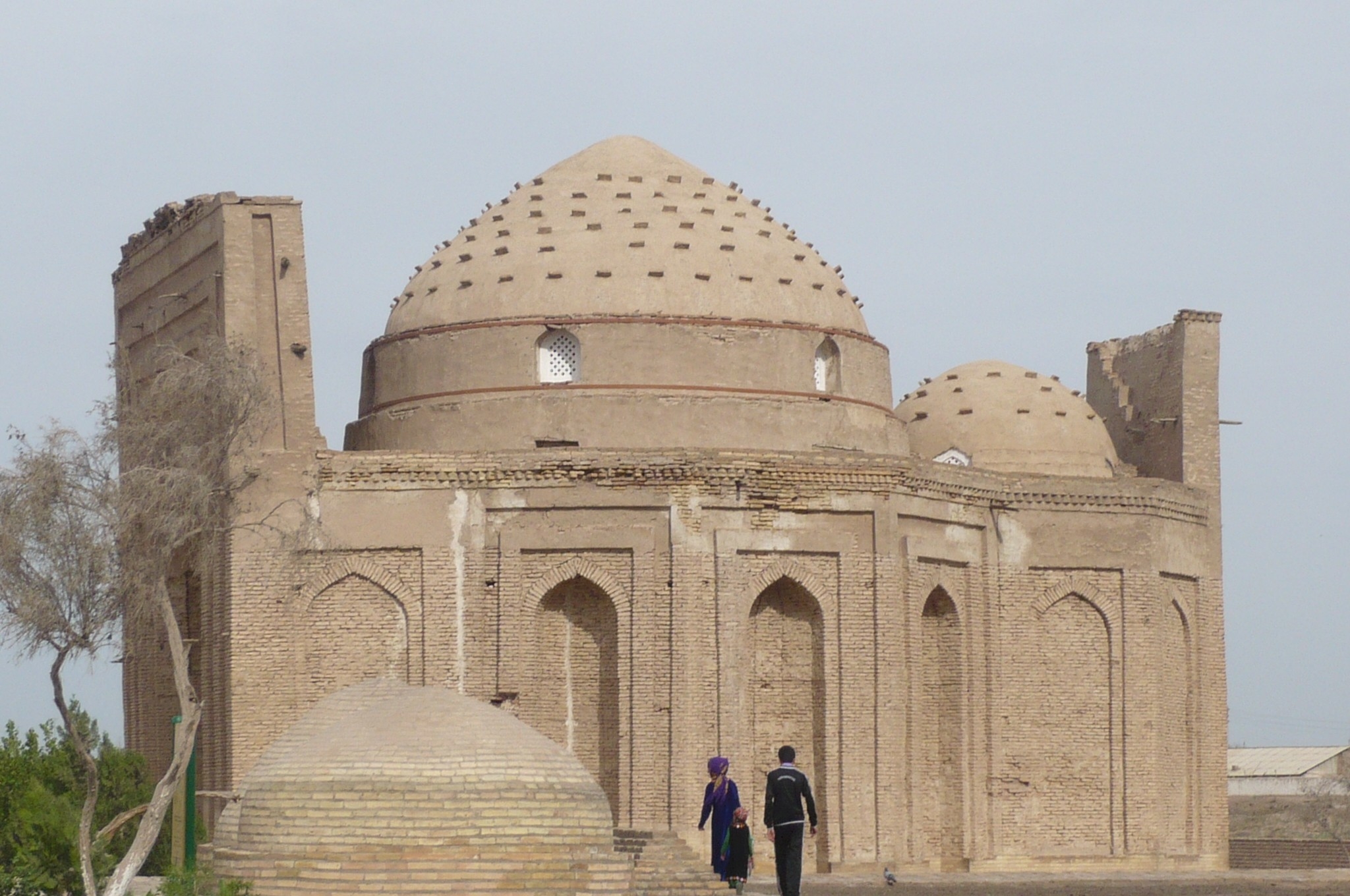
Exterior of the Mausoleum of Najm al-Din Kubra at Kunya-Urgench
Exterior of the Mausoleum of Najm al-Din Kubra at Kunya-UrgenchRoland Lin / UNESCO / Wikimedia Commons · CC BY-SA 3.0 IGO
Dates
1145 – 1221 CE
Region
Khwarazm (Kunya-Urgench)
Order
Kubrawiyya

Biography

Najm al-Dīn Kubrā taught in Khwarazm at the beginning of the thirteenth century, when Kunya-Urgench was a major urban and intellectual centre. His teaching circle became known for disciplined attention to visionary experience and the inner states of the seeker.

Later accounts portray his death during the Mongol destruction of Khwarazm in 1221. Whatever the shaping force of that memory, his writings and students made the Kubrawiyya one of Central Asia's most consequential Sufi networks.

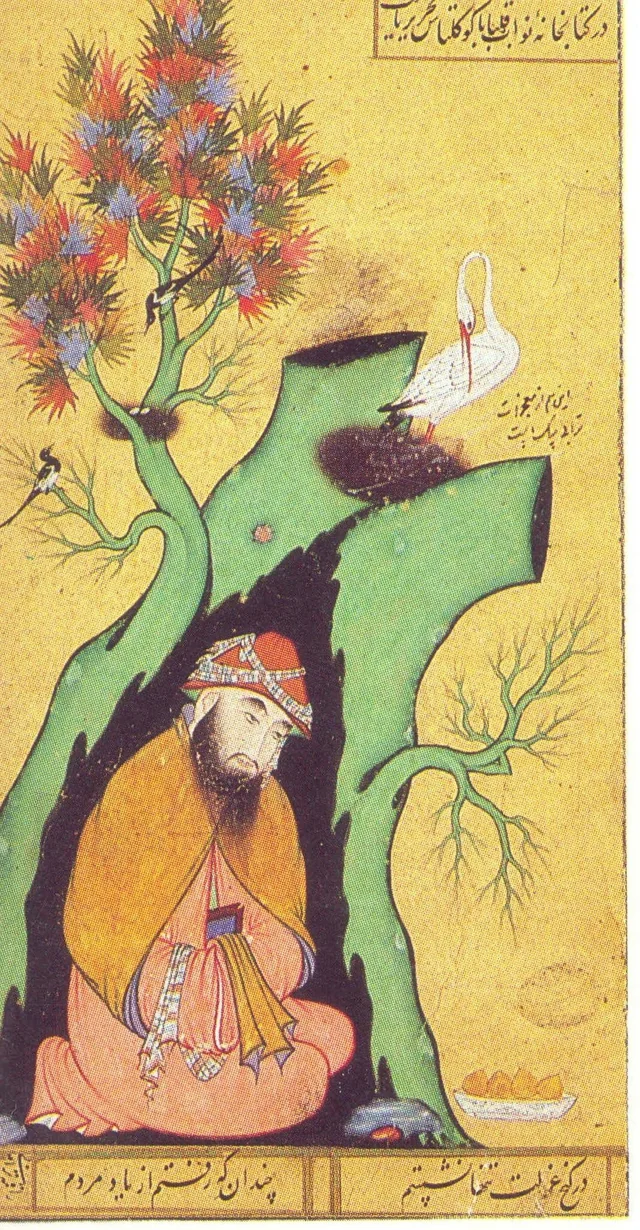
Later devotional book illustration identified as Najm al-Din Kubra
Visual memory of the master. This later devotional illustration, preserved in the Atlas book archive, is identified as Najm al-Dīn Kubrā. It is presented as a work of remembrance rather than as a contemporary historical likeness.
Deep reading

A life within the path

Life in Place

Kubra taught in Khwarazm as Kunya-Urgench stood among the most vibrant cities of the eastern Islamic world. His circle formed in a place where trade, scholarship, Persian literary culture, and the anxiety of an approaching political catastrophe met.

Practice

Kubrawi practice pays close attention to the inner senses: colour, light, fear, beauty, and the shifting weather of the heart. The seeker is not asked to chase visions; rather, visions are tested within discipline, guidance, remembrance, and ethical self-scrutiny.

Texts and Sayings

In Fawāʾiḥ al-Jamāl and the Ten Principles, Kubra writes as a subtle cartographer of spiritual experience. His works give language to states that are easy to romanticise, while repeatedly returning the reader to adab, spiritual danger, and the need for a mature guide.

Afterlife and Pilgrimage

His death during the Mongol devastation of Khwarazm became a powerful memory of fidelity under collapse. The mausoleum at Kunya-Urgench keeps that memory close to the city itself, while his disciples carried Kubrawi thought into Iran, Kashmir, and South Asia.

Primary corpus

Kubra's works and philosophy

Najm al-Dīn Kubrā left more than an order and a shrine. His writings make a demanding vocabulary for the inner life: light and colour, fear and beauty, bewilderment and adab, all held within the work of becoming answerable to God.

Read the long-form Kubra study

Fawāʾiḥ al-Jamāl wa Fawātiḥ al-Jalāl

The Fragrances of Beauty and the Openings of Majesty

Atlas archive: Fragrances of Beauty and Openings of Majesty

Securely attested

Visionary treatise · Inner lights, images, and the discernment of spiritual states

Kubra's best-known work is a disciplined reading of inner experience. Colours, forms, celestial signs, fear, beauty, and light are treated as signs requiring interpretation, never as spiritual trophies to be pursued.

al-Uṣūl al-ʿAshara

The Ten Principles

Atlas archive: Treatise on the Path to God

Securely attested

Practical manual · Voluntary death, ethical transformation, and the ordered path

A concise map of transformation through repentance, renunciation, trust, contentment, retreat, remembrance, turning to God, patience, watchfulness, and acceptance of the divine decree.

Ādāb al-Murīdīn

The Courtesies of the Seekers

Securely attested

Ethical guidance · The conduct of the disciple and the discipline of companionship

A work of Sufi adab: the path is carried through manners, responsibility, humility, and the patient education of desire, rather than through extraordinary experiences alone.

Risāla ilā al-Ḥāʾim al-Khāʾif min Lawmat al-Lāʾim

Epistle to the Wandering, Fearful One Who Fears Blame

Atlas archive: The Perplexed Seeker

Securely attested

Short epistle · Fear, bewilderment, and steadfastness under blame

A compact counsel for the seeker caught between longing, fear, and the pressure of public judgement. The archive's English label is useful, but the Arabic title remains the safer cataloguing anchor.

Risālat al-Sāʾir al-Ḥāʾir ilā al-Sātir al-Wāḥid al-Mājid

Epistle of the Perplexed Traveller to the Veiled, One, Glorious

Atlas archive: Path of the Seekers

Securely attested

Short epistle · The seeker's movement through bewilderment toward God

This work belongs to Kubra's compact teaching texts. Its language of travelling and bewilderment offers a counterweight to simplistic ideas of linear spiritual progress.

Kitāb Ādāb al-Sulūk ilā Ḥaḍrat Mālik al-Mulk wa Mālik al-Mulūk

The Courtesies of Journeying to the Presence of the King of Dominion

Securely attested

Treatise on the path · Conduct on the journey to God

A treatise centred on adab in sulūk: spiritual travel is understood as a re-formation of conduct before it is a language of private feeling.

Ādāb al-Ṣūfiyya

The Courtesies of the Sufis

Atlas archive: Commentary on the Treatise of Spiritual Knowledge

Title mapping under review

Ethical treatise · Sufi manners and formation

The local archive preserves a related English-labelled document. Its exact relation to this Arabic title, and whether it is a translation, commentary, or parallel witness, should be settled during manuscript collation.

al-Uṣūl al-ʿAshara

The ten principles of the path

01

Repentance

A chosen return to God rather than a merely forced return at death.

02

Renunciation

Loosening the hold of possession, status, and appetite on the heart.

03

Trust

Entrusting oneself to God without turning passivity into a virtue.

04

Contentment

Reducing the demands through which the self tries to rule.

05

Seclusion

Making protected space for the heart to become truthful.

06

Constant remembrance

Sustaining dhikr until attention is gathered rather than scattered.

07

Turning toward God

Giving the whole direction of one's being to the divine presence.

08

Patience

Remaining faithful through the labour of remaking the self.

09

Watchfulness

Keeping the heart awake before divine grace and one's own intention.

10

Satisfaction

Receiving the divine decree without the ego's habitual objection.

The path is a voluntary death

The Ten Principles repeatedly compare the seeker’s work to dying before death: not a rejection of life, but the unmaking of the ego’s claim to be the centre of life.

Light requires discernment

Kubra’s coloured lights are not a spectacle or a diagnosis. Inner images are to be tested through worship, ethical conduct, guidance, and sobriety.

Adab carries knowledge

For Kubra, spiritual knowledge cannot be separated from how one speaks, receives correction, keeps company, and bears responsibility for another person.

Bewilderment is not failure

His shorter epistles make room for the perplexed traveller. The path may deepen through fear, unknowing, and the loss of easy certainty.

The Atlas distinguishes titles established in scholarly bibliographies from practical archive labels. Local files are being collated against Arabic and Persian witnesses before they are presented as complete critical editions or direct English translations.

Tomb and pilgrimage landscape

Mausoleum of Najm al-Din Kubra

Kunya-Urgench, Dashoguz Region, Turkmenistan

Lower Amu Darya / historic Khwarazm oasis, near the old Silk Road city of Gurganj.

Explore Kunya-Urgench on the map

Contribution

  • Articulated a sophisticated vocabulary of visionary experience, light, and spiritual perception.
  • Authored influential practical treatises, including the Ten Principles.
  • Trained disciples who carried Kubrawi teaching across Iran, Central Asia, South Asia, and Kashmir.

Teachings

  • The science of coloured lights
  • Ten principles of the mystical path
  • Vision as verified knowledge

Works

  • Fawāʾiḥ al-Jamāl wa Fawātiḥ al-Jalāl
  • al-Uṣūl al-ʿAshara (The Ten Principles)
  • Ādāb al-Murīdīn
  • Risālat al-Sāʾir al-Ḥāʾir
  • Risāla ilā al-Ḥāʾim al-Khāʾif

Historical impact

Founder of the Kubrawī order and martyr of the Mongol conquest of Khwarazm. His disciples spread across Persia, India and Kashmir.

Historical reading

His works, teaching, and order are well attested. The precise circumstances of his death draw on later historical and hagiographical accounts.

Source notes

Encyclopaedia Iranica, “Kobrawiya”; UNESCO nomination dossier for Kunya-Urgench; Kubra's surviving treatises.